

 Language
 Language
Our produck
Our produck have Vibrating Screen, Screw Conveyor, Belt Conveyor, Vacuum Conveyor, Bag Dumping Station. The product application in Food, Chemical, Pharmaceutical, Mineral, Pottery, Metallurgy.
Quality Management
We are qualified with ISO quality management system and CE certificate, all the main components are fine manufactured in our own factory with strict inspection, and quality is always our priority.
Advanced Equipment
We have Laser Cutting Machine, CNC bending machine, Spot Welding Machine, Polishing Machine,Fixed bench press, air plasma cutting machine, platform CNC punch, CNC hydraulic guillotine shear, four-column hydraulic press, universal lifting table milling machine, radial drilling machine, hydraulic digital display sheet Bending machine,
Production Market
Our products have been exported to Russia, USA, France, Namibia, Saudi Arabia, Thailand, Uruguay, Singapore, Spanish, Germany, Cyprus,Botswana, Korea, Switzerland,Newzeland, Pakistan, Brazil, Malaysia, Spanish, Peru, Chile,Turkey, Portugal, etc.
|
Model |
Belt Width (mm) |
Length(m) |
Belt Speed (m/s) |
Lifting Height |
Slope Angle |
Capacity (m³/h) |
|
ST-500 |
500 |
3-25 |
0.8-2.0 |
Adjustable height by motor |
0-30 |
50-100 |
|
ST-600 |
600 |
3-25 |
0.8-2.0 |
Adjustable height by motor |
0-30 |
60-120 |
|
ST-650 |
650 |
3-25 |
0.8-2.0 |
Adjustable height by motor |
0-30 |
100-250 |
|
ST-800 |
800 |
3-25 |
0.8-2.0 |
Adjustable height by motor |
0-30 |
170-350 |
|
ST-1000 |
1000 |
3-25 |
0.8-2.0 |
Adjustable height by motor |
0-30 |
270-550 |
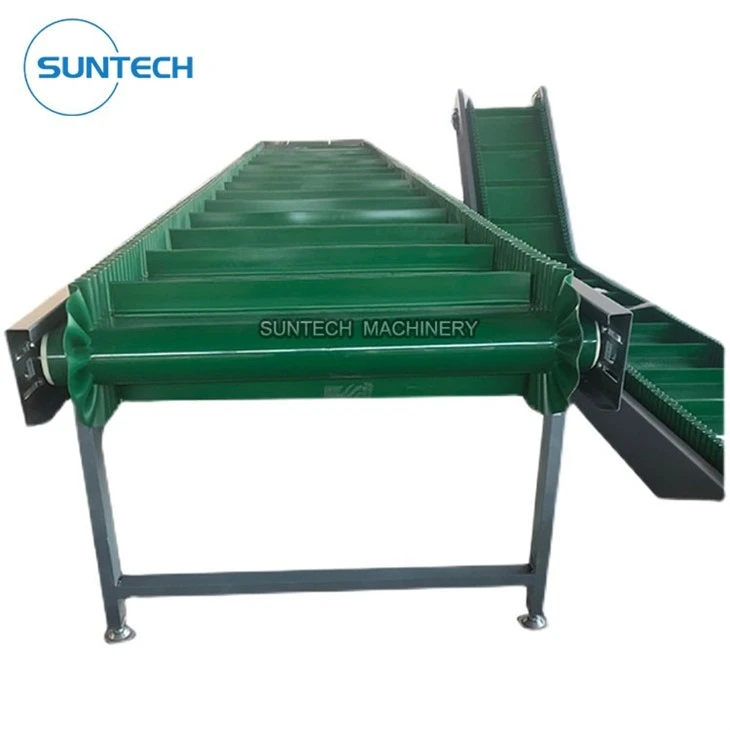
Advantages of Belt Conveyor
Cost-Effective:
One of the biggest benefits of belt conveyors is their cost-effectiveness. They are significantly less expensive than other types of material handling equipment, such as cranes and forklifts, and they require less maintenance and fewer repairs over time. This makes them a cost-effective solution for transporting materials in a variety of industries.
Increased Efficiency:
Belt conveyors can significantly increase the efficiency of a material handling system. They can move materials quickly and efficiently, reducing the amount of time and labor required to transport materials from one location to another. This increased efficiency can help to increase productivity and reduce costs for businesses.
Versatility:
Belt conveyors are highly versatile and can be used to transport a wide range of materials, including powders, granules, and large objects. They can be customized to meet the specific needs of a particular application, making them a flexible solution for a variety of industries.
Reduced Risk of Injury:
Another benefit of belt conveyors is that they reduce the risk of injury to workers. Unlike manual material handling techniques, such as lifting and carrying, belt conveyors automate the process of transporting materials, reducing the risk of injury to workers.
Improved Safety:
Belt conveyors also improve the overall safety of a material handling system. They are equipped with safety features, such as emergency stop buttons and automatic shut-off systems, which can help to prevent accidents and injuries.
Automated Assembly Lines
Belt conveyors play a crucial role in automated assembly lines, where they transport parts from one workstation to another. This automation increases production speed and reduces the need for manual labor. Industries such as automotive, electronics, and machinery heavily rely on conveyor systems for efficient assembly.
Material Handling in Warehouses
In warehouses, belt conveyors are used to move boxes, packages, and other materials from loading docks to storage areas and vice versa. They help to improve workflow and reduce the manual effort required for moving heavy objects, thereby increasing efficiency and reducing the risk of workplace injuries.
Food Processing and Packaging
Belt conveyors are commonly used in the food processing industry to transport raw materials through different stages of production, such as washing, cutting, cooking, and packaging
Mining and Quarrying
In mining and quarrying, belt conveyors are used to transport large amounts of materials like coal, ore, and aggregate over long distances. These conveyors help to reduce transportation costs and minimize environmental impact by replacing trucks for material movement.
Agriculture and Farming
Belt conveyors are essential in agriculture for the movement of crops, grains, and other materials within farms and processing facilities. They help farmers to load trucks, transport grains to silos, and efficiently move harvested products from the field to storage.
Recycling Facilities
In recycling plants, belt conveyors transport recyclable materials such as plastics, glass, paper, and metals through sorting and processing systems. These conveyors contribute to increased recycling efficiency and help reduce the environmental impact of waste.
Airport Baggage Handling Systems
Belt conveyors are an essential component of airport baggage handling systems. They help to move luggage efficiently from check-in counters to the loading area of aircraft and from aircraft to baggage claim areas. These systems are designed to handle large volumes of baggage quickly and accurately.
Pallet Handling and Transfer Systems
In industrial environments, pallet handling systems rely on belt conveyors to move pallets loaded with products across different stages of production or warehousing. Belt conveyors ensure smooth transfer, especially when handling heavy or large items.
Pharmaceutical and Chemical Industries
The pharmaceutical and chemical industries utilize belt conveyors to safely transport sensitive products, such as chemicals, powders, and pharmaceutical tablets, during the production process. These systems ensure precision, minimize contamination, and meet regulatory requirements for safety.
Retail and Distribution Centers
In retail and distribution centers, belt conveyors help move goods efficiently between receiving, sorting, storage, and shipping areas. They help manage high volumes of inventory, ensuring faster processing times and improving customer service.
Belt
The belt is the most critical component of the conveyor system. It serves as the surface on which materials are transported. Depending on the application, belts can vary in material, thickness, and width.
Drive Unit
The drive unit powers the conveyor belt. It typically consists of an electric motor, gearbox, and pulley system. The motor turns the drive pulley, which moves the belt along the conveyor’s path. Key components include:
Motor: Converts electrical energy into mechanical energy.
Gearbox: Reduces the motor’s speed while increasing torque.
Pulleys: Guide and support the belt; the drive pulley is responsible for movement, while the idler pulley supports the belt’s return.
Ldlers
Ldlers are rollers that support the belt along its length. They play a crucial role in maintaining the belt’s tension and alignment.
Take-Up Unit
The take-up unit adjusts the tension in the belt to ensure optimal performance. It compensates for any elongation of the belt over time.
Belt Support Structure
The belt support structure consists of frames and supports that hold the conveyor system in place. It provides stability and prevents sagging, ensuring smooth operation. Key components include:
Frames: Provide the overall structure for the conveyor system.
Supports: Ensure stability and alignment of the belt and idlers.
Skirting
Skirting is a protective barrier that surrounds the edges of the belt to contain materials and prevent spillage. Properly installed skirting can reduce material loss and improve safety.
Sensors and Controls
Modern belt conveyors often include sensors and control systems to monitor performance and automate processes.


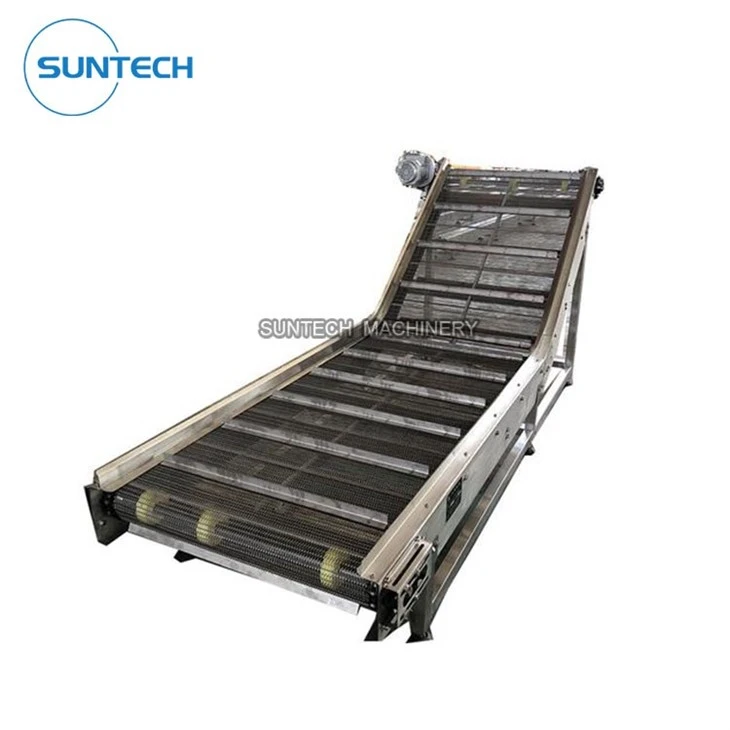
Roller Bed Belt Conveyor
This type of conveyor belt has a surface of rollers just under the belt. The rollers are close together, so there isn’t much sagging of the belt. They are good for both long and short distance travel. In some cases, they can be so short that they only need two rollers for the whole system.
Flat Belt Conveyor
One of the most popular types of conveyors is the flat belt conveyor, commonly used for moving items within a building. For internal transportation, the flat belt conveyor design involves several motorized rollers and pulleys to pull the belt. The flat belt conveyor system uses belts made of fabrics, polymers, or natural rubber, allowing it to carry various materials.
Modular Belt Conveyor
Modular belt conveyors use a series of rigid, interlocking pieces, unlike flat belt conveyors, which use a seamless loop of flexible belt. This modular belt conveyor design provides strength and versatility, allowing the conveyor to operate across various temperatures and pH levels.
Cleated Belt Conveyor
Cleated belt conveyors are designed with stoppers or cleats that divide the belt into equal sections. This cleated belt conveyor design prevents particles and materials from rolling back or falling off as the conveyor moves up and down. The cleats on the cleated belt are essential for maintaining material flow and stability.
Curved Belt Conveyor
This conveyor features a frame that is pre-bent, allowing it to carry items around tight corners. It is ideal for areas with limited space where curved conveyor belt design helps save room. The curves can be as steep as 180 degrees.
Incline/Decline Belt Conveyor
On inclined conveyors, keeping things from falling off the belt requires a tighter tension force, more torque, and traction on the belt surface. So, they will have a gear motor, a centre drive, and a take up. The belt must also have a rough surface to make it easier to grip.
Sanitary Washdown Conveyor
Health and safety rules usually require sterilisation and rough washing in the pharmaceutical and food industries. Washdown and sanitary conveyors are made to handle these kinds of sanitary tasks. Most of the time, thin, flat belts are used in this setting.
Troughed Conveyors
A troughing belt conveyor is not a separate type of belt, since troughing can be added to any type of conveyor.
Magnetic Belt Conveyor
Magnetic belt conveyors use ferrite or neodymium magnets to move and control ferrous metal parts, making them ideal for small items that don’t fit on traditional conveyors. They operate similarly to regular belt conveyors but leverage the magnetic properties of materials. Magnets are spread along the conveyor bed, counteracting gravity.
For the longer belt conveyor machine, need to fold together and packed in plywooden box, and the user need to install again after it arrive.

We're well-known as one of the leading belt conveyor manufacturers and suppliers in China. If you're going to wholesale belt conveyor made in China, welcome to get quotation from our factory. Also, customized service is available.
circular vibratory screeners, sieve filter machine, industrial shaker screen(0/10)
